
JOSEF KA
FOAM OF DAYS
A Four-Part Site-Specific Performance Cycle
Stre!fen Festival of Performance Art
Görlitz, Germany · 2026
Festival theme: Tempo Tempo
Foam of Days is a four-part site-specific performance cycle created during the Stre!fen Festival of Performance Art in Görlitz in response to the festival theme Tempo Tempo.
The project began in the apartment where I lived during the festival. The building had once been home to Jewish residents who were deported to Auschwitz during the Nazi regime. From this private interior, the performances moved into the streets, monuments and public spaces of Görlitz.
Foam became the recurring material and structure of the cycle: whipped cream, soap foam, champagne, water. It covers, obscures, cleans, marks and dissolves. It interrupts vision and makes speech impossible.
Rather than reconstructing history, the cycle asks how historical experience persists: not as a fixed narrative, but as something unstable that returns through bodies, gestures, conversations and everyday places.
PART I — WHIPPED CREAM
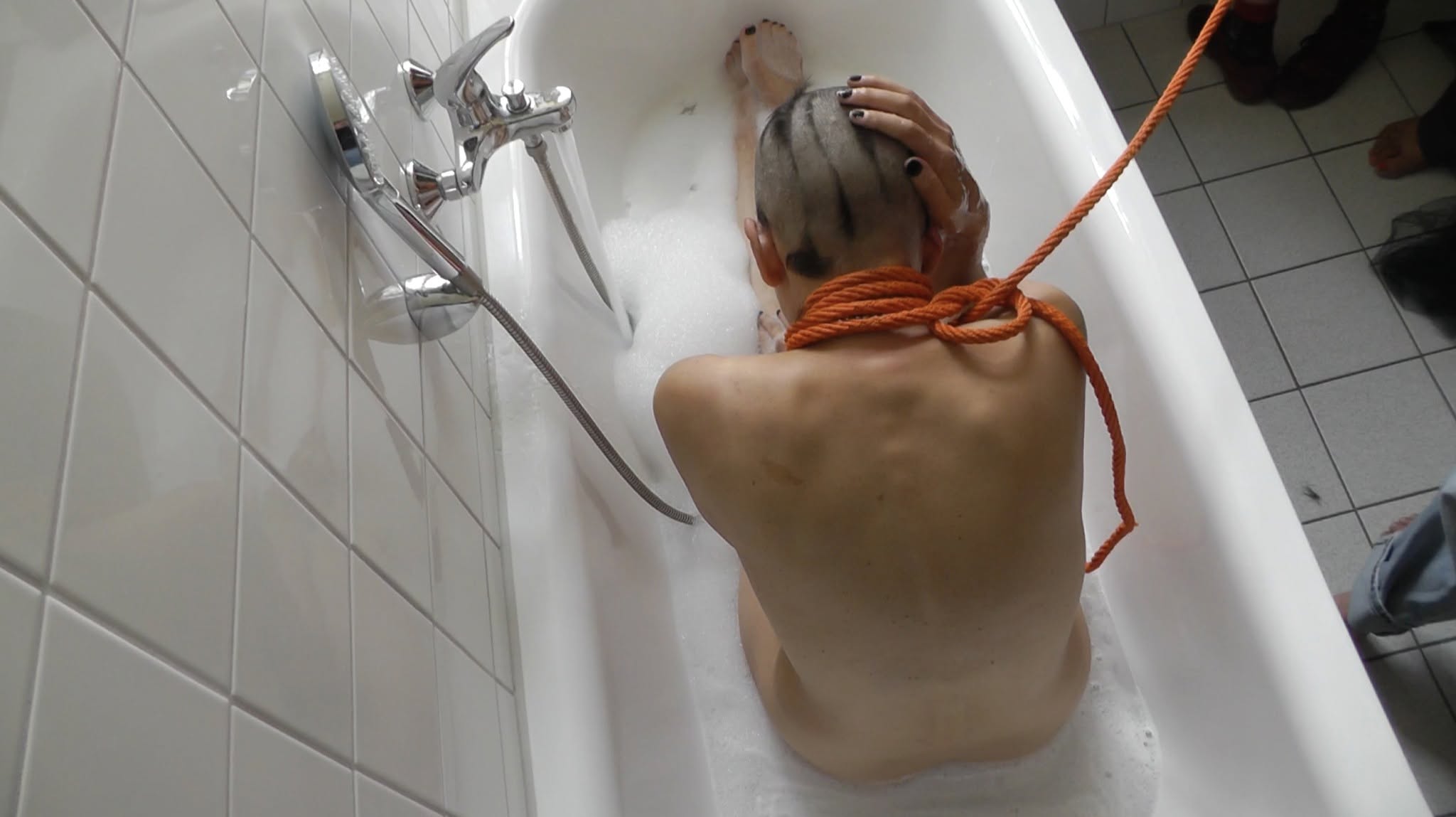
The performance begins inside the apartment.
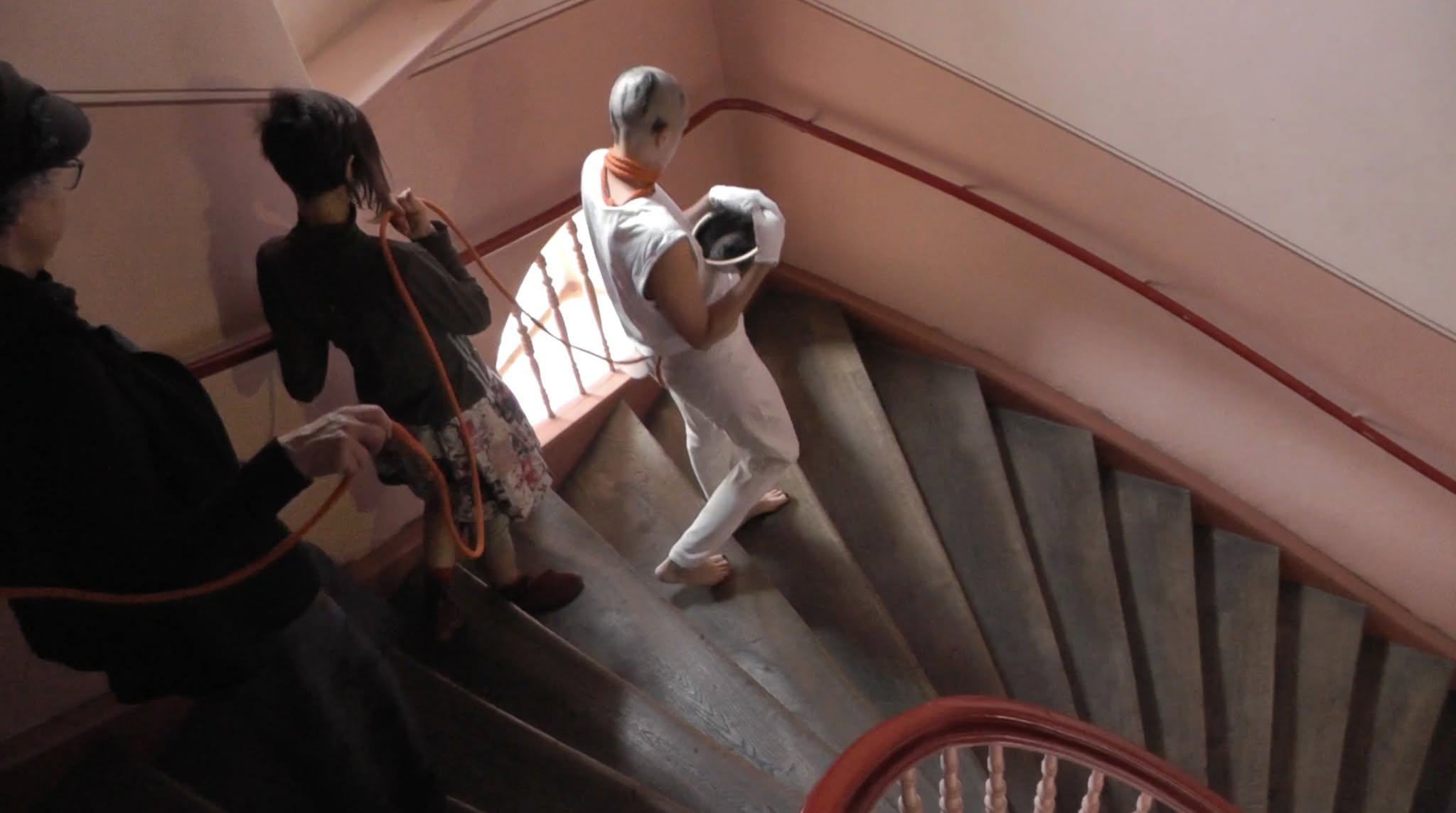
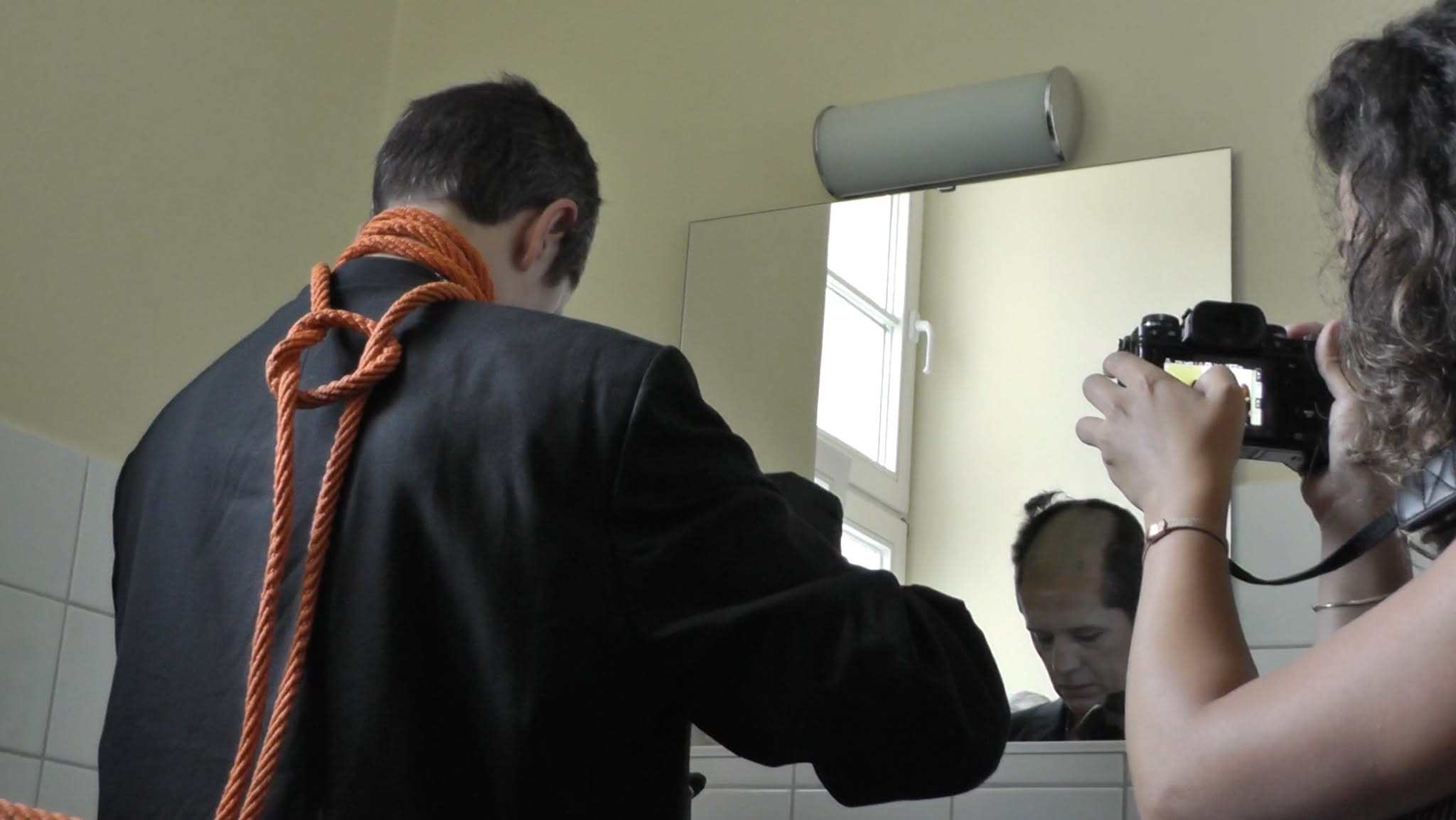
I shave my head and then lead the audience out into the city.
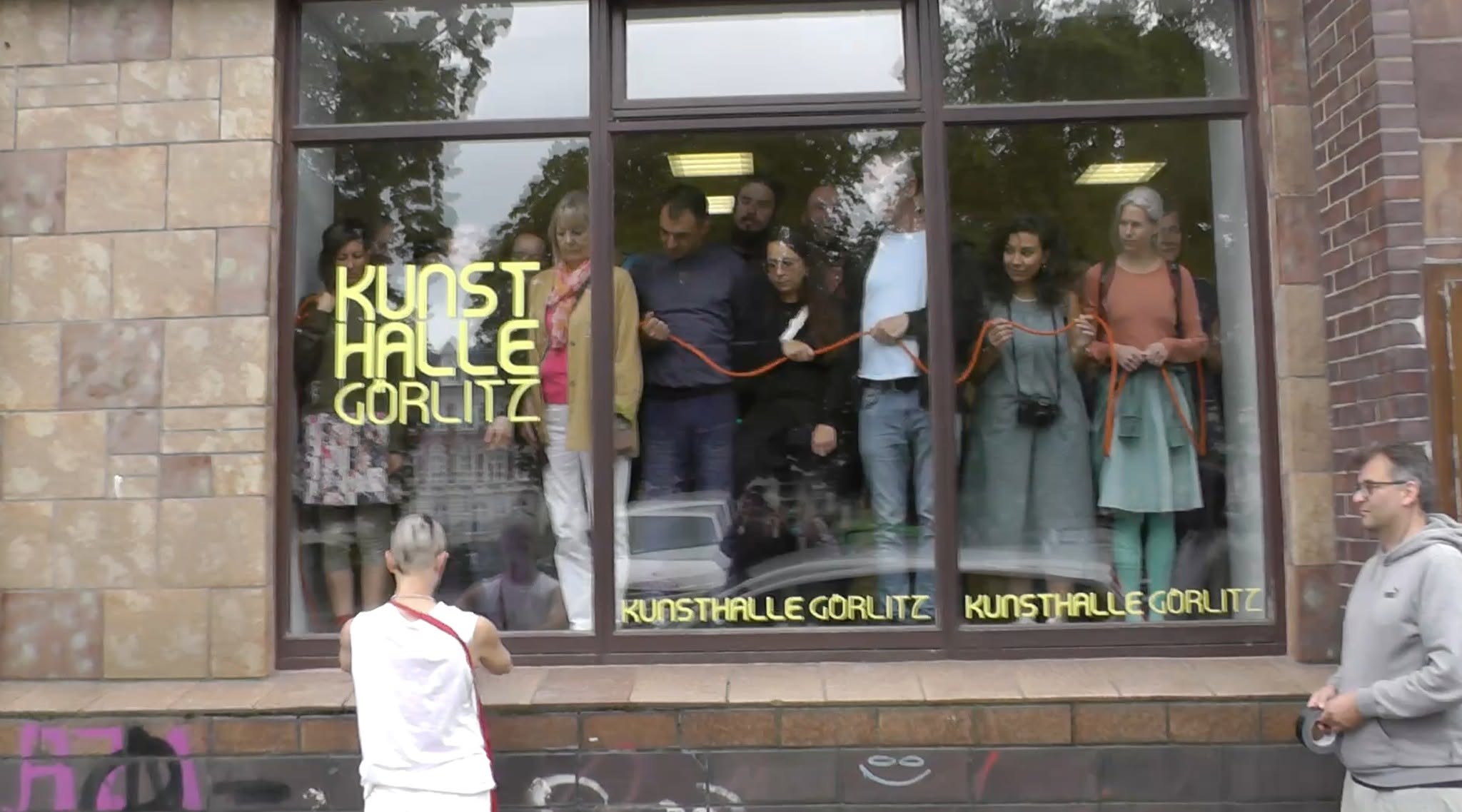
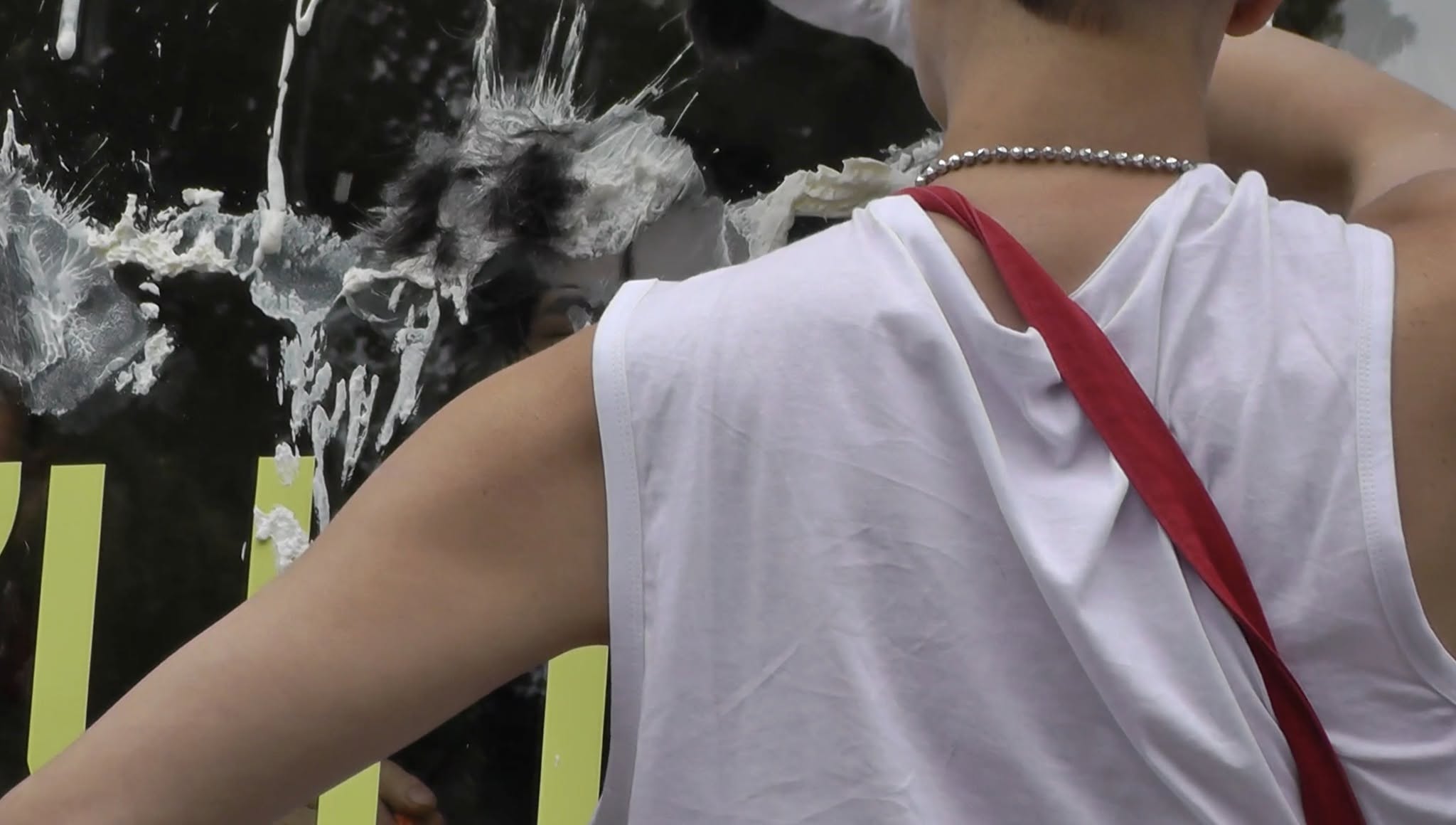
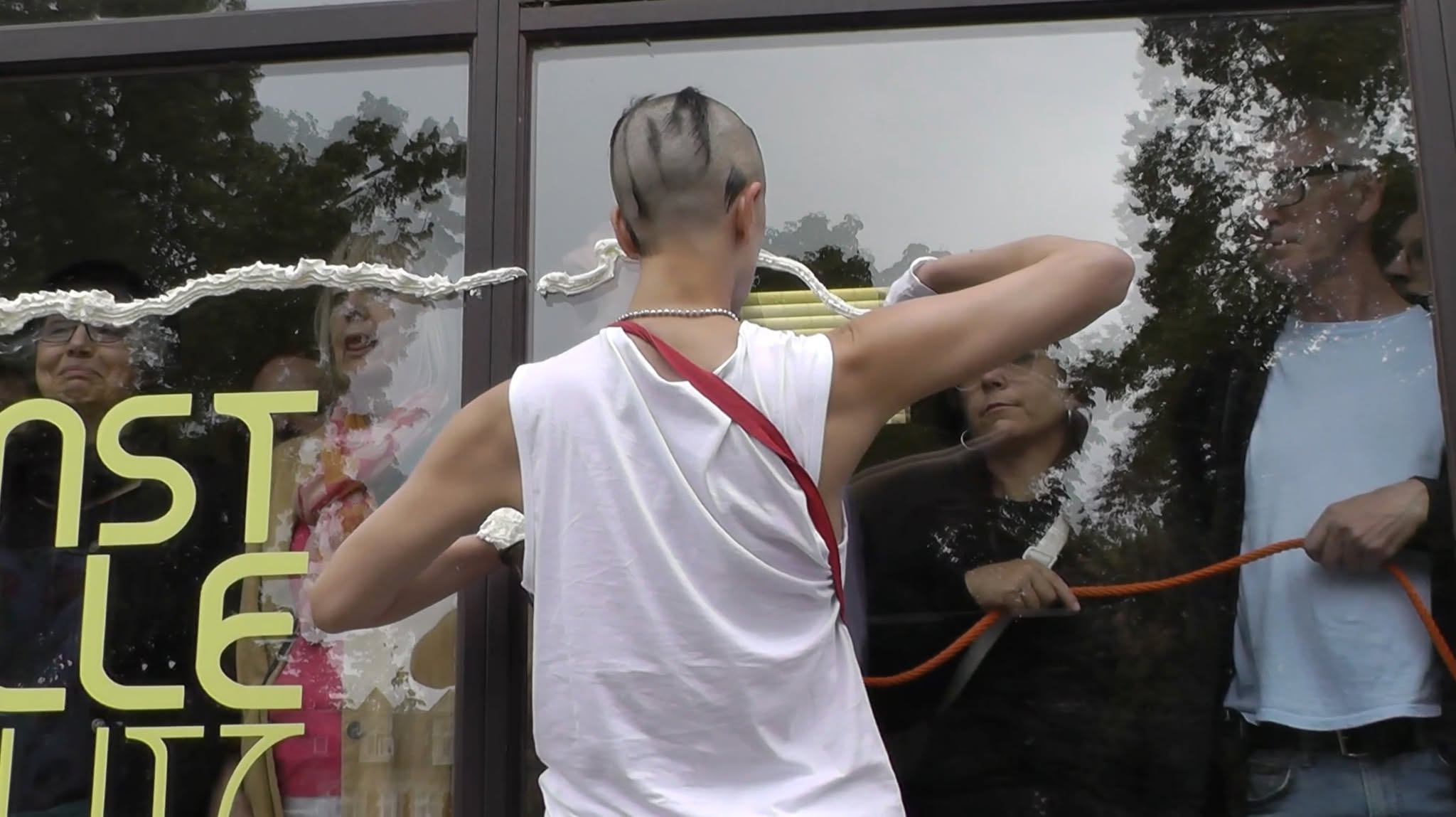
At a shop window, the audience becomes part of the display. The spectators are no longer simply watching; they become visible bodies inside the urban landscape.
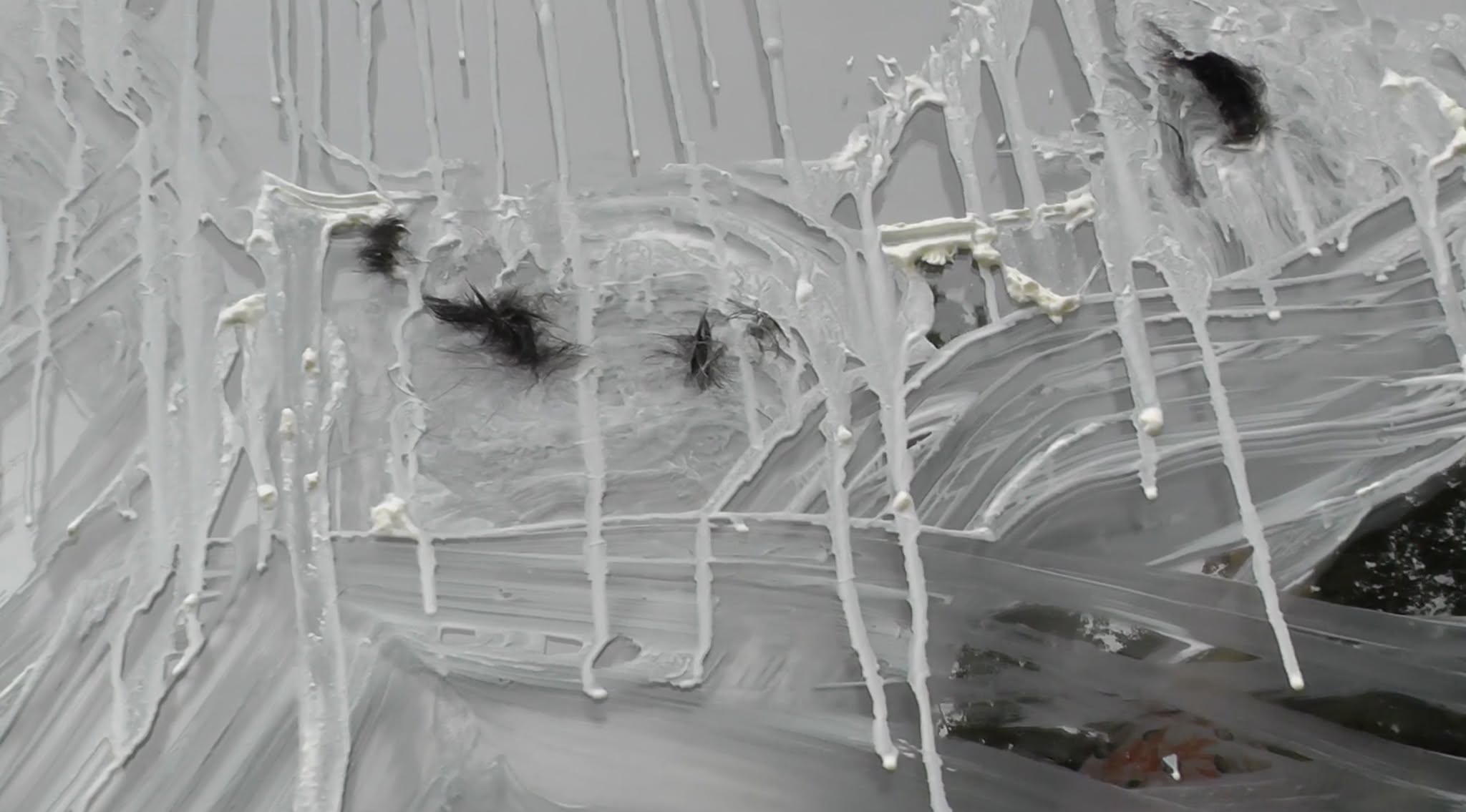
I cover each person’s eyes with whipped cream mixed with my freshly shaved hair.
Vision is suspended.
The audience is transformed from observers into an image.
Video stills: Emrah Gökdemir
PART II — CLEANING
Summer 1936 — Summer 2026
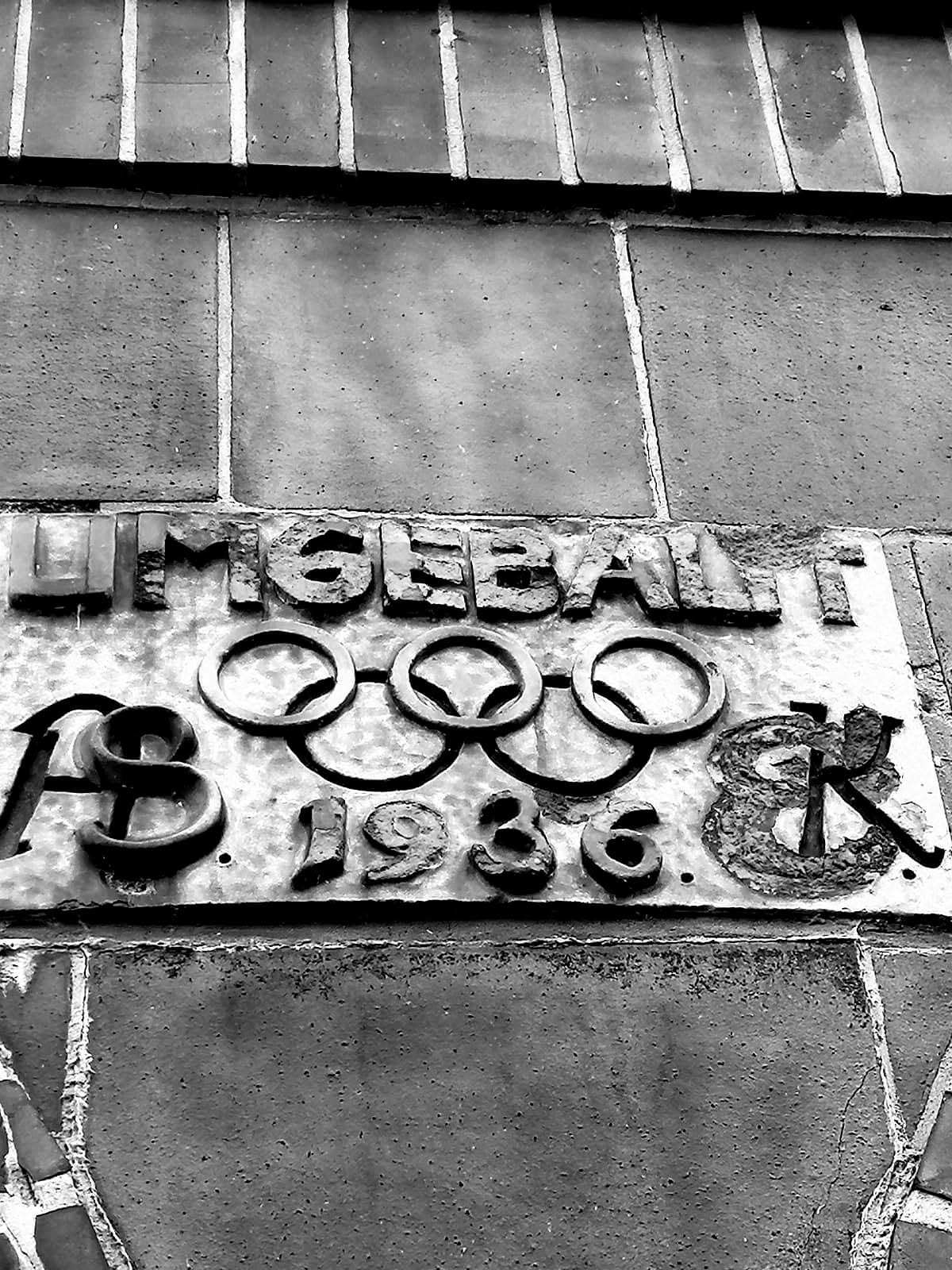
The action begins at Künstlerhaus Görlitz, beneath the plaque commemorating the 1936 Olympic Games.
The starting point is Leni Riefenstahl: filmmaker and photographer who documented the Berlin Olympics under the Nazi regime and transformed the human body, movement and athletic performance into a powerful visual spectacle. Later in life, she turned to underwater photography, working beneath the surface of tropical seas.
From this historical and visual connection, the action moves from the Olympic body to my own body.
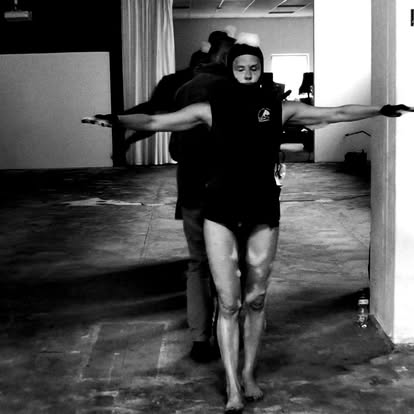
I put on a diving suit. I cannot do this without the physical assistance of the other artists. The act of dressing becomes an act of dependence: my autonomy is temporarily transferred to the group.
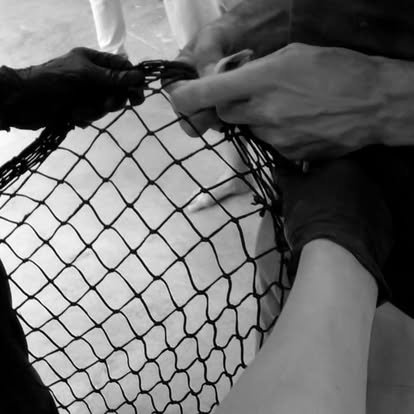
Together, we are bound inside a fishing net and move through the city.
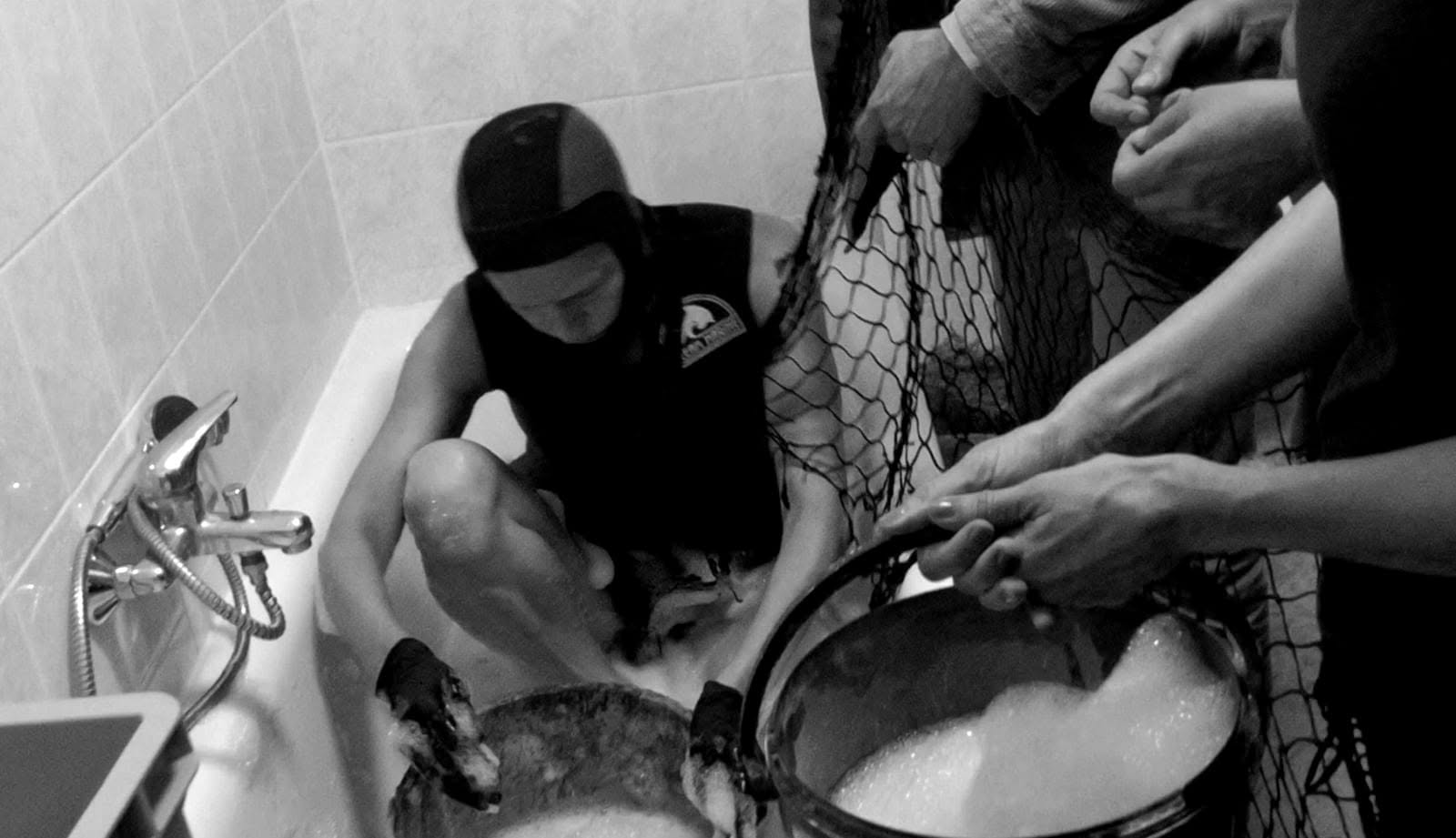
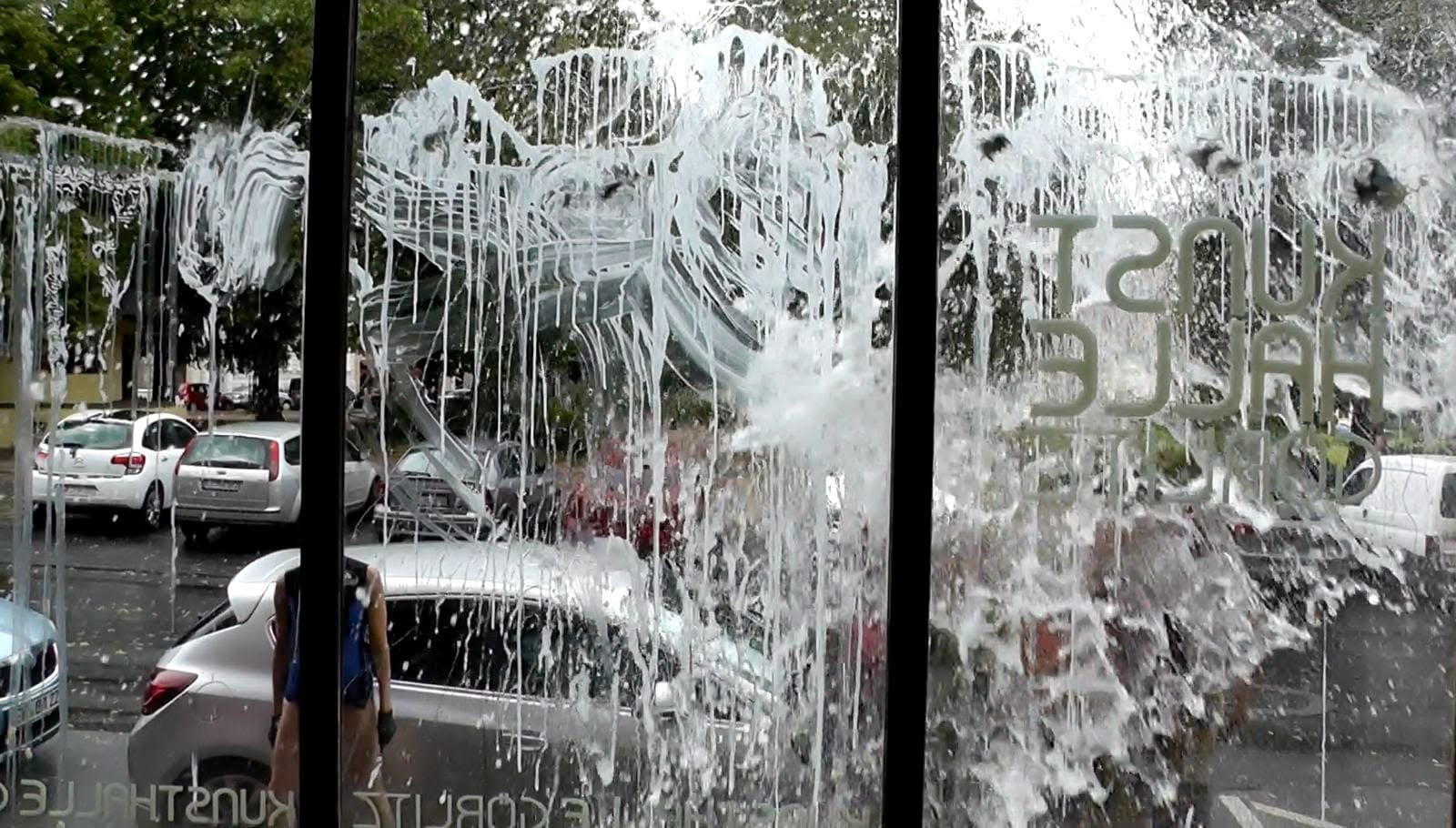
We collect water and foam and carry them back to the shop window where the previous action took place.
We wash away the traces left by Part I.
But cleaning does not mean erasing.
The foam carries, obscures and redistributes what has already happened. What appears to be removed may remain — on the body, in the place, in memory.
Cleaning becomes an unstable action: a gesture of removal that cannot guarantee disappearance.
Video stills: Emrah Gökdemir
PART III — A STAIN INSTEAD OF A LINE
Action #7, Germany
Tribute to Günter Brus
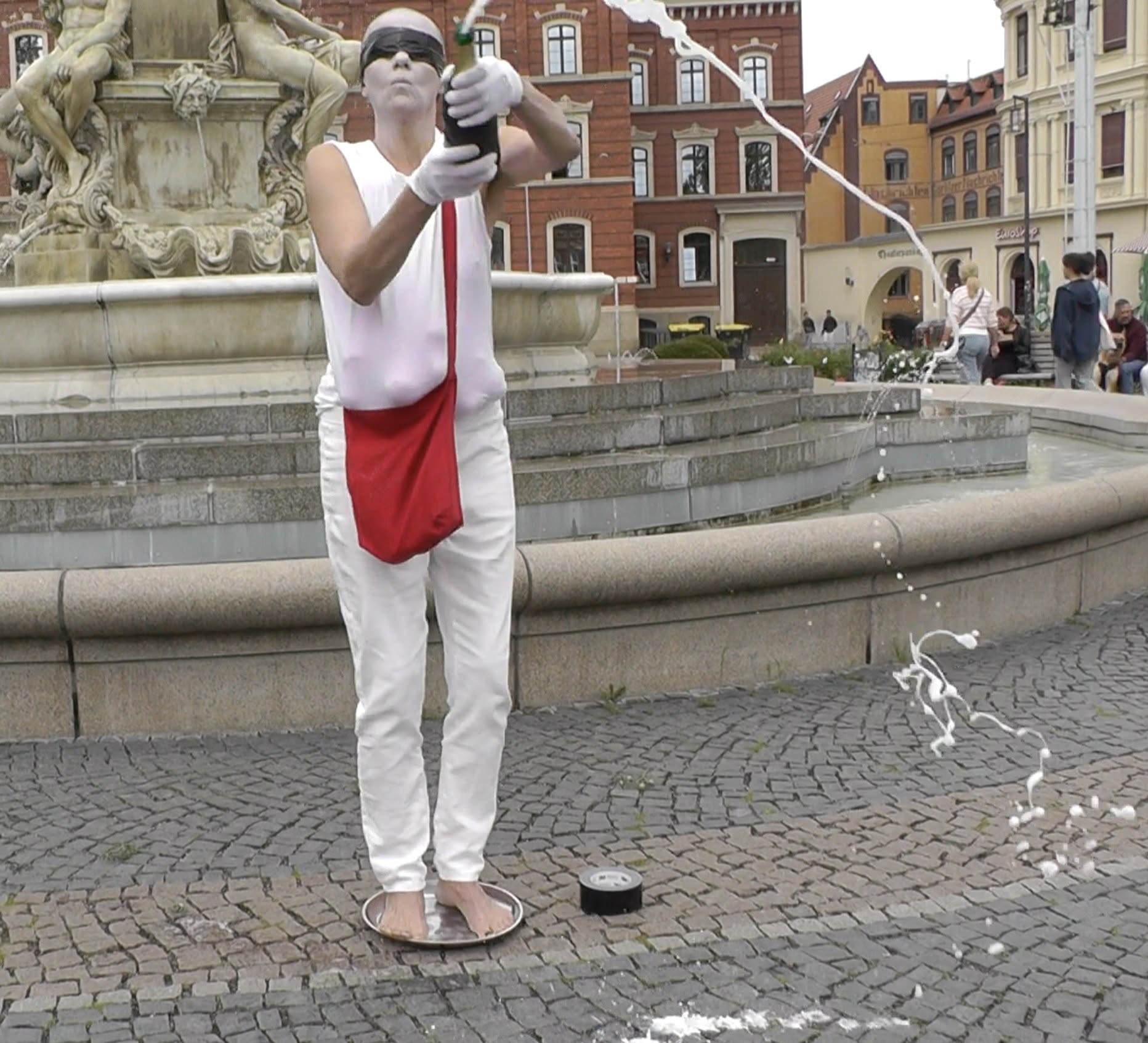
Since 2022, I have been developing an ongoing performance dialogue with Günter Brus through reinterpretations of Wiener Spaziergang (Viennese Walk, 1965).
Brus’s painted body entered the streets of Vienna as a living image, confronting the relationship between the individual body, public space and social control.
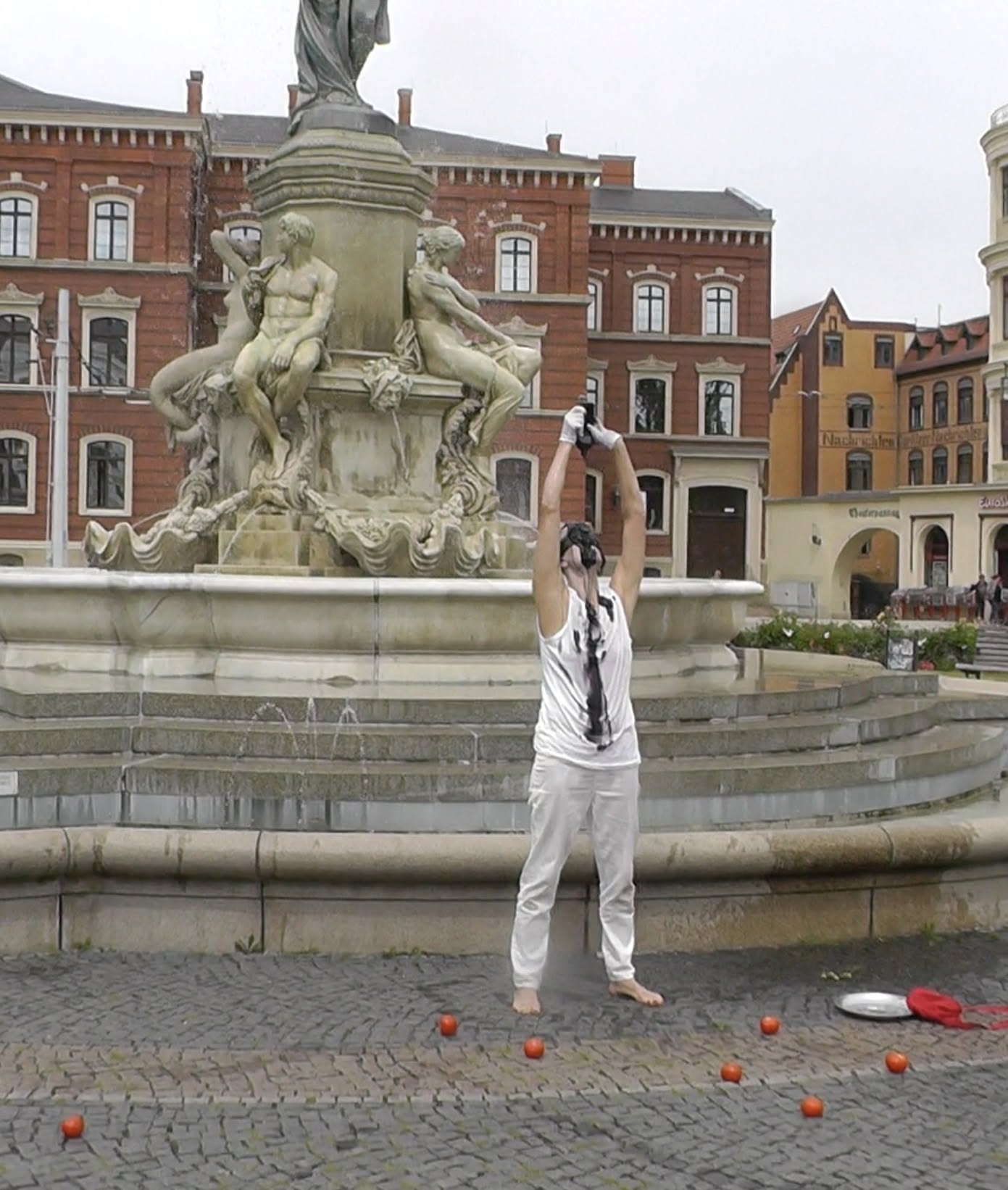
In Görlitz, the action continues, but the city changes it.
Three female figures form the central image: the sculpture of Muschelminna at the fountain, the unveiled figure of Justice, and the living body.
I balance a plate of tomatoes on my head and wash myself in the Muschelminna fountain. I spray champagne over the audience, conceal the tomatoes beneath my clothing and release them into the crowd.
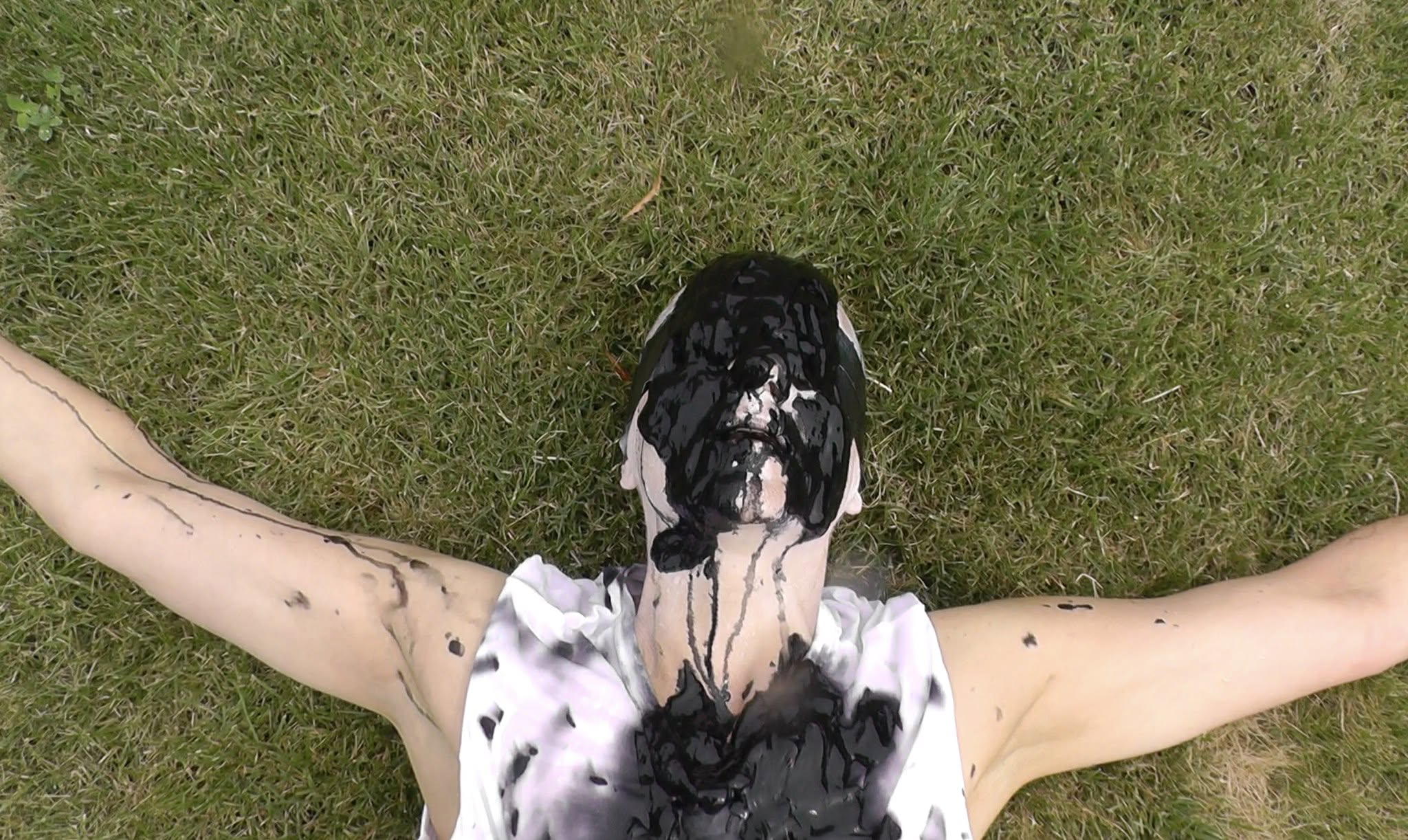
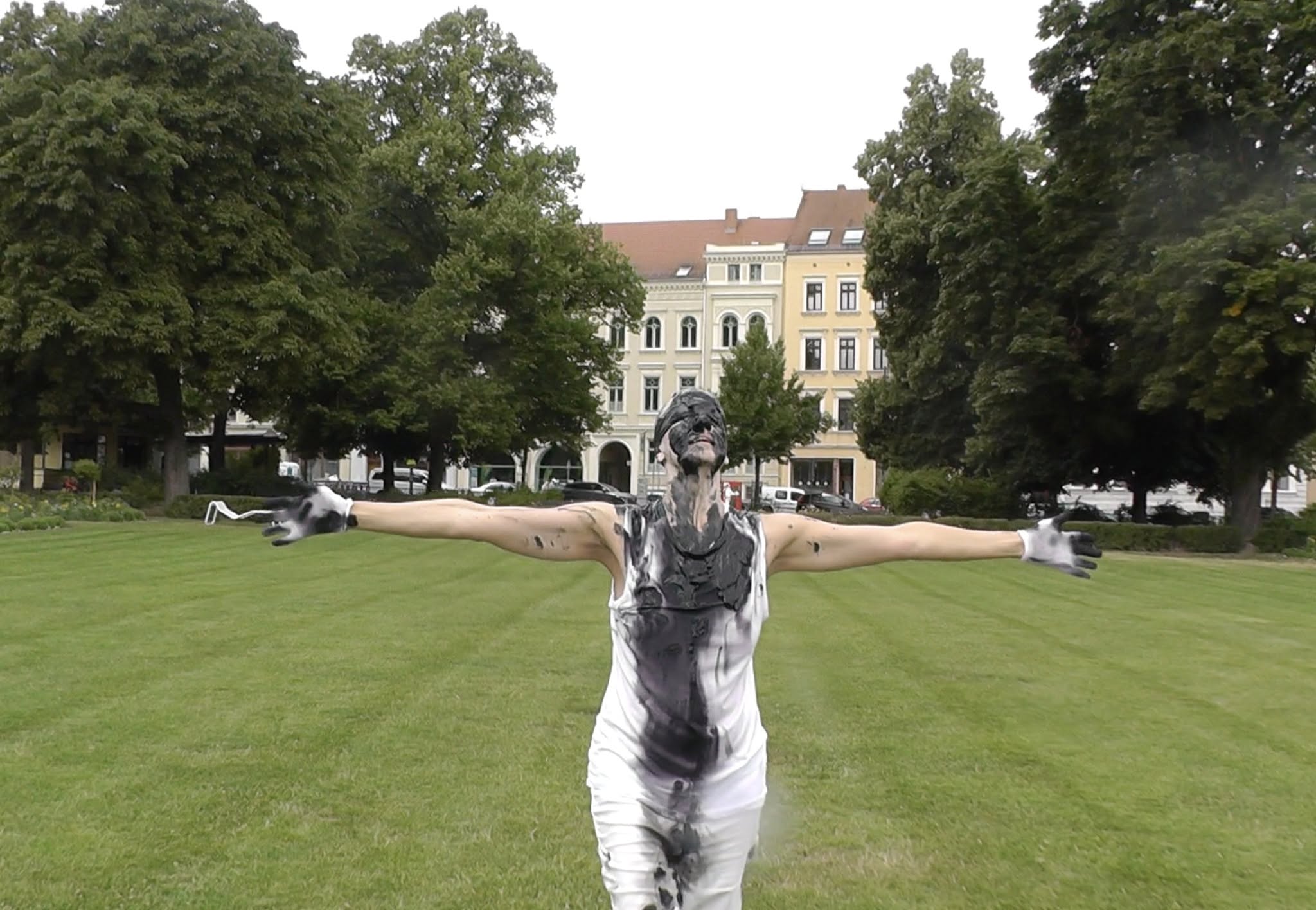
Then I blindfold myself with black tape and attempt to draw Brus’s iconic black line across my own body.
Without sight, the line loses its authority.
It breaks, shifts and dissolves into a stain.
I carry my body as a cross to the Memorial to the Victims of Fascism.
The action ends with a Viennese waltz.
The stain replaces certainty.
The body refuses to become a monument.
Video stills: Tobias
PART IV — EPILOGUE
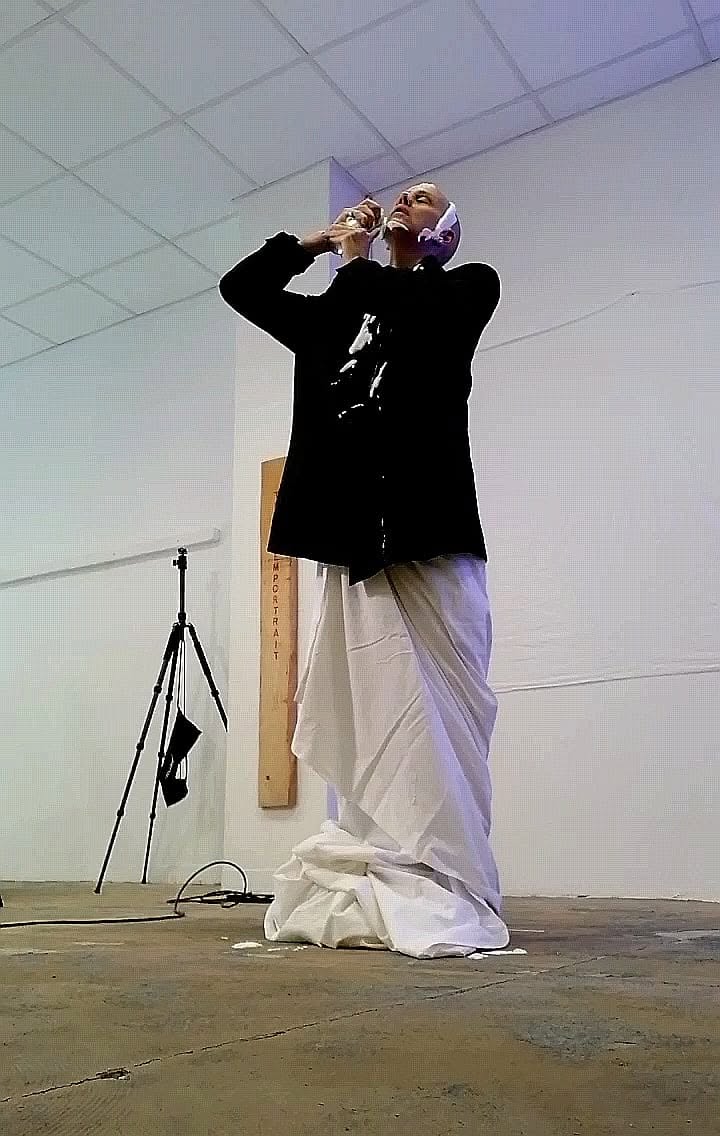
Immediately after Part III, an official festival interview begins.
The camera is already recording.
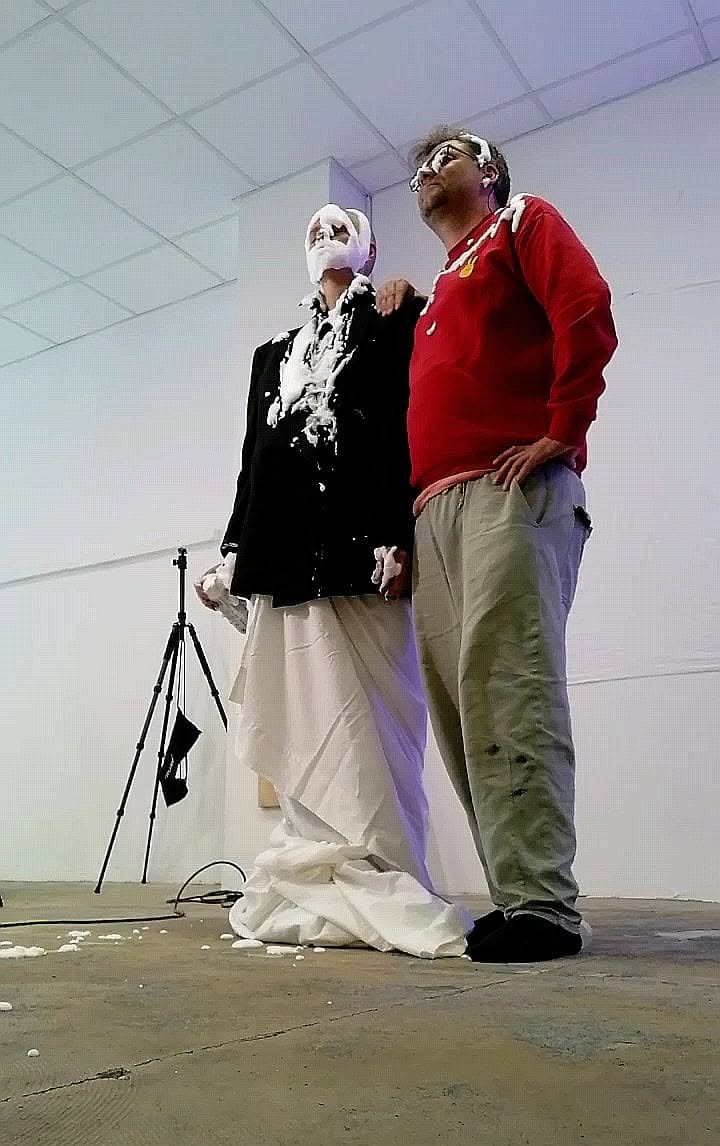
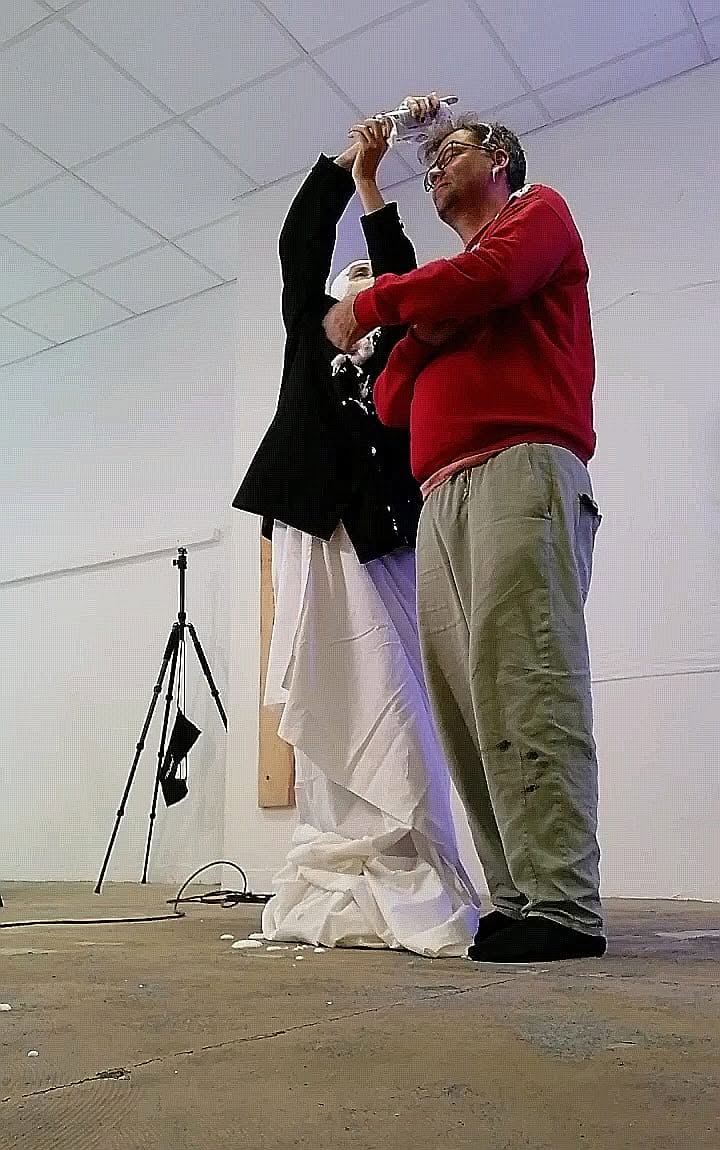
Instead of speaking, I cover myself and the interviewer with foam.
Speech becomes impossible.
The interview becomes the final performance.
The camera continues to record, but there is no conventional statement, explanation or conclusion.
Documentation itself becomes the work.
The archive contains no account of the performance.
It contains the performance.
EPILOGUE TO THE CYCLE
Foam of Days ends without a final interpretation.
Instability becomes the condition through which history is experienced.
Memory shifts. Bodies change. Monuments acquire new meanings. Language reaches its limits.
Foam becomes both material and method: it organizes time, memory and action.
It surfaces, expands, covers, carries traces and dissolves.
History does not survive only through monuments or official narratives.
It also survives through changing forms — gestures, conversations, bodies and places.
Like foam, these forms appear, transform and disappear.
But disappearance does not necessarily mean absence.
CREDITS
Created by: Josef Ka
Created during: Stre!fen Festival of Performance Art, Görlitz, Germany, 2026
Video documentation / stills: Emrah Gökdemir, Tobias, Josef Ka
Special thanks: Stre!fen Festival team, artists, volunteers, Tobias, Andi
With thanks to: Sebastian Haenel, Sascha Röhricht, Jan Treiber, Tobias, Andi


